
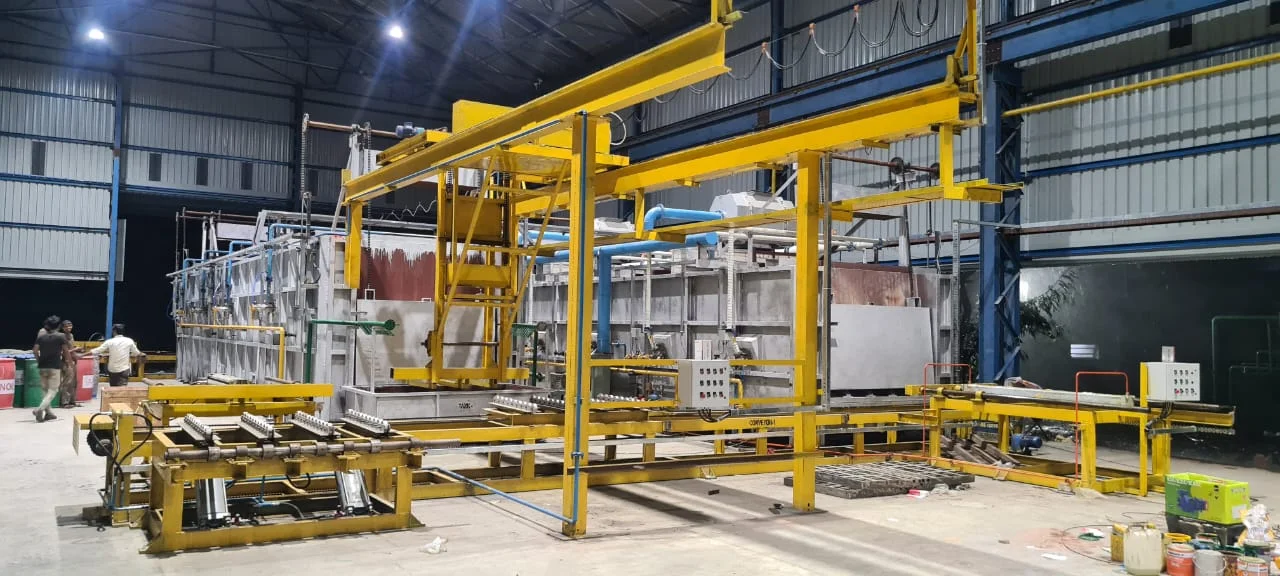
Every aspect of this furnace is designed to maximize productivity and ensure consistent heat treatment results.
Advanced PID-based temperature regulation ensures uniform heating across the entire workload zone with minimal deviation.
Roller hearth design enables non-stop production flow, eliminating batch-to-batch waiting times and boosting output.
Premium refractory lining and heavy-duty structural steel withstand extreme thermal cycling for years of reliable service.
Optimized insulation and heat recovery systems significantly reduce fuel consumption and operating costs.
Full PLC integration with HMI interface for automated process control, monitoring, and data logging capabilities.
Designed for mass production of small to medium components loaded in trays or fixtures at high line speeds.
View our continuous hardening and tempering furnace installations at client facilities across India.
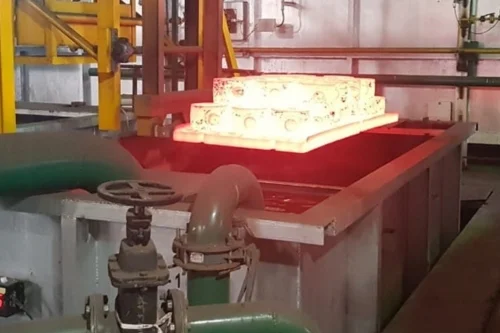
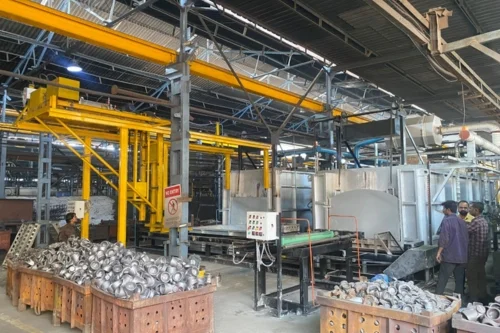
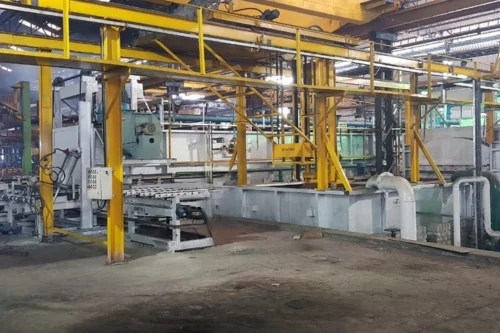
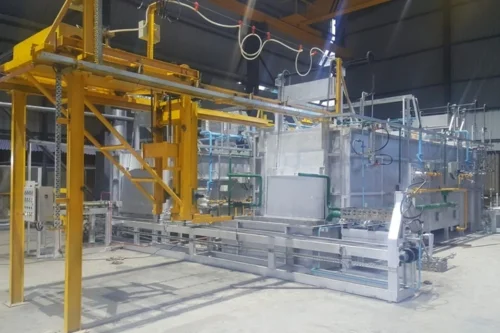
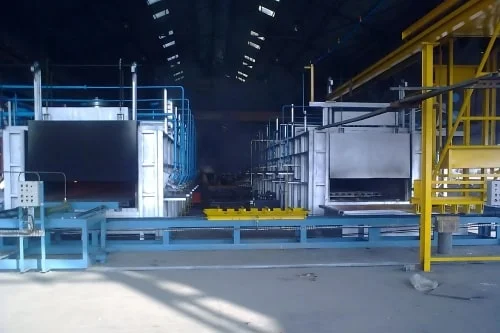
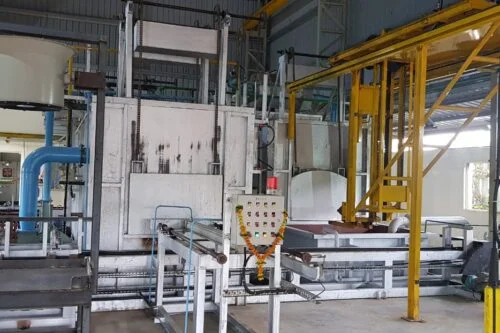
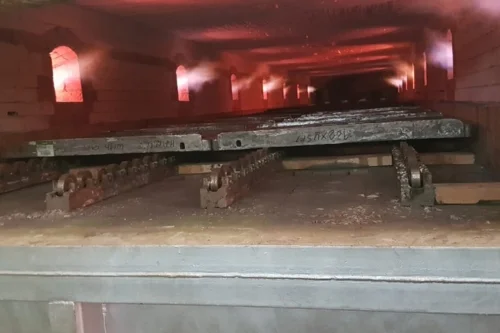
The workload moves sequentially through precisely controlled thermal zones for consistent results.
Components are loaded onto trays or fixtures at the furnace entry point in an organized arrangement.
Workload passes through the preheat zone, gradually raising temperature to prevent thermal shock.
Austenitizing zone brings components to critical temperature, followed by rapid quenching for hardness.
Controlled reheating in the tempering zone achieves the final balance of hardness and toughness.
Continuous Hardening & Tempering Heat Treatment Furnaces are the backbone of modern mass-production heat treatment facilities. These furnaces utilize a roller hearth mechanism where the workload is placed on trays or fixtures that glide smoothly through multiple temperature zones on ceramic or metallic rollers.
The furnace is divided into distinct zones — preheating, austenitizing (hardening), quenching, and tempering — each precisely controlled to achieve the desired metallurgical properties. Hydraulic pushers advance the workload through the furnace at controlled speeds, ensuring consistent exposure to each thermal zone.
Available in both gas-fired and electrically heated configurations, these furnaces cater to a wide range of industries including automotive components, bearing races, fasteners, hand tools, and aerospace parts. The continuous nature of the process eliminates the inefficiencies of batch-type operations, delivering higher throughput with lower labor costs and reduced energy consumption per part.
These furnaces are ideally suited for hardening and tempering of small to medium-sized components such as bearing balls, rollers, races, fasteners, small gears, hand tool components, and precision machined parts. They are widely used in automotive, aerospace, defense, and general engineering industries where consistent quality at high volume is essential.
The roller hearth design is particularly advantageous for delicate components that cannot withstand the mechanical shock of pusher-type systems. The smooth rolling motion minimizes part-to-part contact and eliminates deformation risks during transport through the furnace.